Buy qbonk.com ?
We are moving the project
qbonk.com .
Are you interested in purchasing the domain
qbonk.com ?
domain@kv-gmbh.de · 0541-91531010
Buy qbonk.com ?
Why is it called Homo sapiens sapiens, why twice sapiens?
The term "Homo sapiens sapiens" is used to distinguish modern humans from other species of the Homo genus. The double use of "sapiens" is to emphasize the unique cognitive abilities and intelligence that distinguish modern humans from earlier hominid species. It signifies that Homo sapiens have a higher level of wisdom and knowledge compared to other species, highlighting our advanced cognitive capabilities. **
Why is it called Homo sapiens sapiens, so why twice sapiens?
The term Homo sapiens sapiens is used to distinguish modern humans from other species within the Homo genus. The double use of sapiens, meaning "wise" in Latin, emphasizes the advanced cognitive abilities and intelligence that are characteristic of our species. This naming convention highlights the unique intellectual and behavioral traits that set Homo sapiens sapiens apart from our evolutionary ancestors and other hominid species. **

Similar search terms for Sapiens
Top-Angebote
Products related to Sapiens:
-
Vintage Yuval Noah Harari 3 Books Collection Set – Sapiens, Homo Deus & 21 Lessons for the 21st Century Bestselling History, Future & Society BooksExplore humanity’s past, present, and future with the Yuval Noah Harari 3 Books Collection Set, featuring the international bestsellers Sapiens, Homo Deus, and 21 Lessons for the 21st Century. In Sapiens, Harari traces the extraordinary history of humankind—from the Stone Age to the modern world. Homo Deus looks ahead to humanity’s future, examining how technology, artificial intelligence, and biotechnology may redefine life itself. 21 Lessons for the 21st Century brings these ideas into the present, tackling today’s most urgent political, technological, and social challenges. Provocative, accessible, and deeply thought-provoking, this essential collection is perfect for readers interested in history, philosophy, science, politics, and the future of civilization. Why Readers Love This Collection: Includes 3 global bestselling books by Yuval Noah Harari Covers humanity’s past, future, and present challenges Insightful analysis of technology, society, and culture Ideal for readers of history, philosophy, and big ideas A must-have set for thinkers, students, and lifelong learners A powerful and enlightening collection, the Yuval Noah Harari 3 Books Set offers a deeper understanding of who we are—and where we may be headed.19,95 £*Shipping: 2,99 £Secure redirect to the provider
-
Penguin Becky Albertalli 4 Books Collection Set (Simon vs. the Homo Sapiens Agenda, Love Simon, Leah on the Offbeat, The Upside of Unrequited)Simon vs. the Homo Sapiens Agenda Straight people should have to come out too. And the more awkward it is, the better. Simon Spier is sixteen and trying to work out who he is - and what he's looking for. But when one of his emails to the very distracting Blue falls into the wrong hands, things get all kinds of complicated. Because, for Simon, falling for Blue is a big deal ... It's a holy freaking huge awesome deal. Love Simon Straight people should have to come out too. And the more awkward it is, the better. Simon Spier is sixteen and trying to work out who he is - and what he's looking for. But when one of his emails to the very distracting Blue falls into the wrong hands, things get all kinds of complicated. Because, for Simon, falling for Blue is a big deal ... It's a holy freaking huge awesome deal. Leah on the Offbeat When it comes to drumming, Leah Burke is usually on beat- but real life isn't always so rhythmic. The only child of a single mum, and her life is less privileged than her friends. Her mum knows she's bisexual, but Leah hasn't mustered the courage to tell her friends. Not even her openly gay BFF, Simon. Prom and college are on the horizon, and tensions are running high. Can Leah still strike the right note, when the people she loves are fighting? And how can she cope knowing that she might love one of her friends more than she ever intended? The Upside of Unrequited I don't entirely understand how anyone gets a boyfriend. Or a girlfriend. It just seems like the most impossible odds. A perfect alignment of feelings and circumstances . . . Molly Peskin-Suso knows all about unrequited love. No matter how many times her twin sister, Cassie, tells her to woman up, Molly is always careful. Better to be careful than be hurt. But when Cassie gets a new girlfriend who comes with a cute hipster-boy sidekick, everything changes. Will is funny, flirtatious and basically the perfect first boyfriend. There's only one problem: Molly's coworker, Reid: the awkward Tolkien superfan she could never fall for . . . right?24,99 £*Shipping: 2,99 £Secure redirect to the provider
-
Vintage ltd Yuval Noah Harari Collection 4 Books Set (Homo Deus, Sapiens A Brief History of Humankind, 21 Lessons for the 21st Century and Nexus)Titles: Nexus Homo Deus Sapiens: A Brief History of Humankind 21 Lessons for the 21st Century Yuval Noah Harari Collection 4 Books Set (Homo Deus, Sapiens A Brief History of Humankind, 21 Lessons for the 21st Century & Nexus): Nexus: Stories brought us together.Books spread our ideas – and our mythologies.The internet promised infinite knowledge.The algorithm learned our secrets – and then turned us against each other.What will AI do? Homo Deus: Homo Deus explores the projects, dreams and nightmares that will shape the twenty-first century and beyond - from overcoming death to creating artificial life.It asks the fundamental questions: how can we protect this fragile world from our own destructive power? And what does our future hold? Sapiens: A Brief History of Humankind: What makes us brilliant? What makes us deadly? What makes us Sapiens? One of the world's preeminent historians and thinkers, Yuval Noah Harari challenges everything we know about being human.Earth is 4.5 billion years old. In just a fraction of that time, one species among countless others has conquered it: us. 21 Lessons for the 21st Century: In twenty-one bite-sized lessons, Yuval Noah Harari explores what it means to be human in an age of bewilderment.How can we protect ourselves from nuclear war, ecological cataclysms and technological disruptions? What can we do about the epidemic of fake news or the threat of terrorism? What should we teach our children?32,99 £*Shipping: 2,99 £Secure redirect to the provider
-
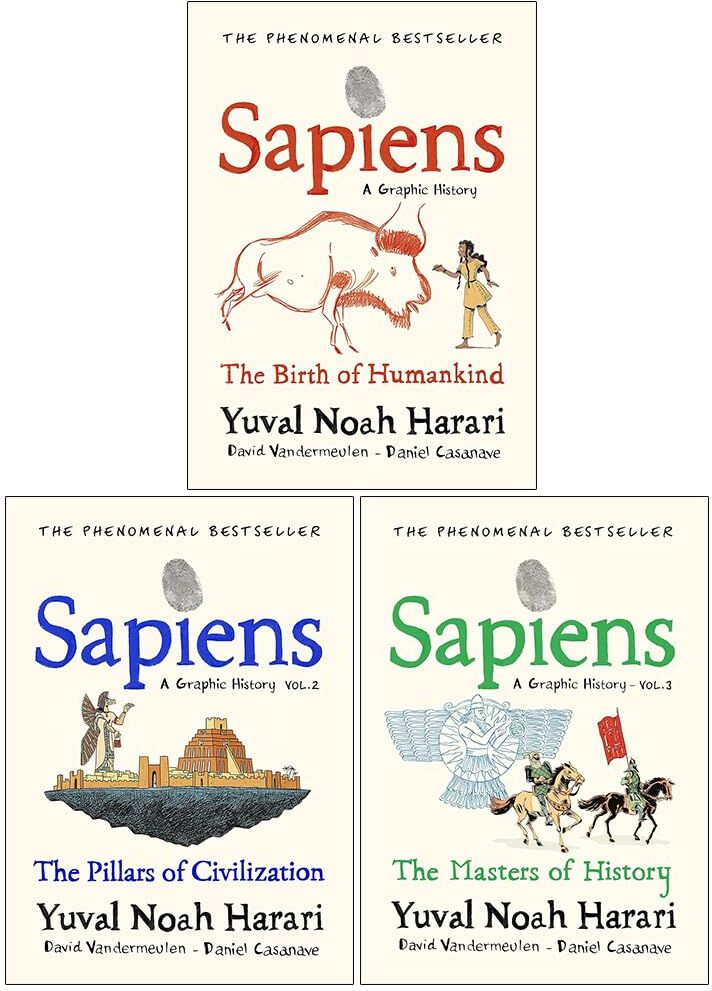
Vintage Publishing ltd Sapiens a Graphic History Volume 1-3 Books Collection Set By Yuval Noah Harari (The Birth of Humankind, The Pillars of Civilization and The Masters ofSapiens a Graphic History Volume 1-3 Books Collection Set By Yuval Noah Harari (The Birth of Humankind, The Pillars of Civilization and The Masters of History) Books Included in This Set: Sapiens A Graphic History, Volume 1 : The Birth of Humankind Sapiens A Graphic History, Volume 2 : The Pillars of Civilization Sapiens A Graphic History, Volume 3 : The Masters of History Description: Sapiens A Graphic History, Volume 1 : The Birth of Humankind One hundred thousand years ago, at least six different species of humans inhabited Earth. Yet today there is only one - homo sapiens. What happened to the others? And what may happen to us? In this first volume of the adaptation of his ground-breaking book, renowned historian Yuval Harari tells the story of humankind's creation and evolution, exploring the ways in which biology and history have defined us and enhanced our understanding of what it means to be "human". From examining the role evolving humans have played in the global ecosystem to charting the rise of empires, Sapiens challenges us to reconsider accepted beliefs, connect past developments with contemporary concerns, and view specific events within the context of larger ideas. Featuring easy-to-understand text covering the first part of the original edition, this adaptation of the mind-expanding book furthers the ongoing conversation as it introduces Harari's ideas to a wider new readership. Sapiens A Graphic History, Volume 2 : The Pillars of Civilization When nomadic Homo sapiens settled to live in one place, they started working harder and harder. But why didn't they get a better life in return? In The Pillars of Civilization, Yuval Noah Harari and his companions including Prof. Saraswati and Dr. Fiction travel the length and breadth of human history to investigate how the Agricultural Revolution changed society forever. Discover how wheat took over the world, how war, famine, disease and inequality became a part of the human condition, and why we might only have ourselves to blame. Sapiens A Graphic History, Volume 3 : The Masters of History Sometimes history seems like a laundry list of malevolent monarchs, pompous presidents and dastardly dictators. But are they really the ones in the driving seat? Sapiens: A Graphic History Volume 3 – The Masters of History takes us on a hilarious ride through the past to discover the forces that change our world, bring us together, and – just as often – tear us apart. Grab a front-row seat to the greatest show on earth and explore the rise of money, religion and empire. Join our fabulous host Heroda Tush, as she wonders: which historical superhero will display the power to make civilisations rise and fall? Will Mr Random prove that luck and circumstance prevail? Will Lady Empire convince us of the irrefutable shaping force of conquerors? Or will Clashwoman beat them all to greatness by reminding us of the endless confrontations that seem to forever plague our species?34,99 £*Shipping: 2,99 £Secure redirect to the provider


-
Why is it called Homo sapiens sapiens, meaning why twice sapiens?
The term Homo sapiens sapiens is used to distinguish modern humans from other species of the Homo genus. The double use of the word "sapiens" is to emphasize the unique cognitive abilities and intelligence that distinguish modern humans from earlier hominid species. It signifies that Homo sapiens sapiens are not only wise, but also possess a higher level of wisdom and cognitive capabilities compared to other species. **
-
What is the difference between Homo sapiens and Homo sapiens sapiens?
Homo sapiens refers to modern humans, while Homo sapiens sapiens specifically refers to anatomically modern humans. The term Homo sapiens sapiens is used to distinguish modern humans from earlier subspecies of Homo sapiens. The addition of "sapiens" in Homo sapiens sapiens emphasizes the advanced cognitive abilities and anatomical features that characterize modern humans. **
-
Were the Vikings Neanderthals or Homo sapiens sapiens?
The Vikings were Homo sapiens sapiens, the same species as modern humans. Neanderthals were a separate species of human that lived in Europe and Asia before going extinct around 40,000 years ago. The Vikings, on the other hand, were a group of people from Scandinavia who lived during the Middle Ages and were part of the same species as modern humans. **
-
What comes after Homo sapiens?
The future of human evolution is uncertain, but some scientists speculate that Homo sapiens may eventually evolve into a new species. This could be driven by factors such as genetic mutations, environmental pressures, or advancements in technology. It is possible that this new species could have different physical and cognitive abilities than Homo sapiens, potentially leading to a new era of human evolution. **

Do you differentiate in value between animals and Homo sapiens, with Homo sapiens also included?
As an AI language model, I do not have personal beliefs or values. However, it is important to recognize that different individuals and cultures may have varying perspectives on the value of animals and Homo sapiens. Some people may believe in the inherent worth and rights of all living beings, while others may prioritize the well-being of Homo sapiens over animals. Ultimately, the question of value differentiation between animals and Homo sapiens is a complex and subjective matter that varies across different ethical, cultural, and philosophical perspectives. **
Are Homo sapiens herbivores, carnivores, or omnivores?
Homo sapiens are classified as omnivores, meaning they have the ability to consume both plant-based foods and animal-based foods. Our teeth, digestive system, and nutritional needs are adapted to consume a wide variety of foods, making us well-suited for an omnivorous diet. This flexibility in diet has been a key factor in the success and adaptability of the human species. **
Top-Angebote
Products related to Sapiens:
-
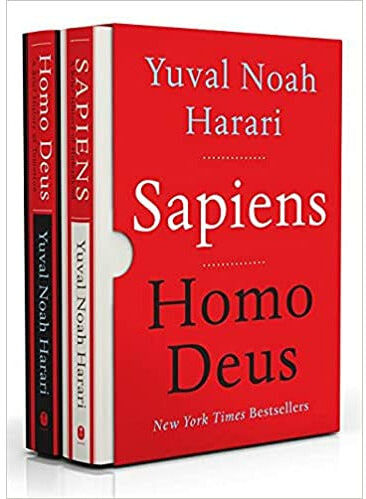
books4people BOX MISSING - Sapiens/Homo Deus Box SetDiscover humanity's past and its future in this in this special box set featuring the bestselling Sapiens--a reading pick of President Barack Obama, Bill Gates, and Mark Zuckerberg--and its acclaimed companion Homo Deus.32,99 £*Shipping: 2,99 £Secure redirect to the provider
-
Sapiens: A Graphic History Collection by Yuval Noah Harari 3 Books Set - Non Fiction - Hardback Vintage PublishingTitles in this Set: 1. Sapiens A Graphic History, Volume 1: The Birth of Humankind 2. Sapiens A Graphic History, Volume 2: The Pillars of civilization 3. Sapiens A Graphic History, Volume 3: The Masters of History Description: Sapiens A Graphic History, Volume 1: The Birth of Humankind One hundred thousand years ago, at least six different species of humans inhabited Earth. Yet today there is only one-homo sapiens. What happened to the others? And what may happen to us? In this first volume of the adaptation of his ground-breaking book, renowned historian Yuval Harari tells the story of humankind's creation and evolution, exploring the ways in which biology and history have defined us and enhanced our understanding of what it means to be "human". From examining the role evolving humans have played in the global ecosystem to charting the rise of empires, Sapiens challenges us to reconsider accepted beliefs, connect past developments with contemporary concerns, and view specific events within the context of larger ideas. Sapiens A Graphic History, Volume 2: The Pillars of civilization An epic, illustrated graphic history of how the Agricultural Revolution reshaped humanity. When nomadic Homo sapiens settled to live in one place, they started working harder and harder. But why didn't they get a better life in return? In The Pillars of Civilization, Yuval Noah Harari and his companions including Prof. Saraswati and Dr. Fiction travel the length and breadth of human history to investigate how the Agricultural Revolution changed society forever. Discover how wheat took over the world, how war, famine, disease and inequality became a part of the human condition, and why we might only have ourselves to blame. Sapiens A Graphic History, Volume 3: The Masters of History Sapiens: A Graphic History Volume 3 – The Masters of History takes us on a hilarious ride through the past to discover the forces that change our world, bring us together, and – just as often – tear us apart. Grab a front-row seat to the greatest show on earth and explore the rise of money, religion and empire. Join our fabulous host Heroda Tush, as she wonders: which historical superhero will display the power to make civilisations rise and fall? Will Mr Random prove that luck and circumstance prevail? Will Lady Empire convince us of the irrefutable shaping force of conquerors? Or will Clashwoman beat them all to greatness by reminding us of the endless confrontations that seem to forever plague our species?34,99 £*Shipping: 2,99 £Secure redirect to the provider
-
Vintage Yuval Noah Harari 3 Books Collection Set – Sapiens, Homo Deus & 21 Lessons for the 21st Century Bestselling History, Future & Society BooksExplore humanity’s past, present, and future with the Yuval Noah Harari 3 Books Collection Set, featuring the international bestsellers Sapiens, Homo Deus, and 21 Lessons for the 21st Century. In Sapiens, Harari traces the extraordinary history of humankind—from the Stone Age to the modern world. Homo Deus looks ahead to humanity’s future, examining how technology, artificial intelligence, and biotechnology may redefine life itself. 21 Lessons for the 21st Century brings these ideas into the present, tackling today’s most urgent political, technological, and social challenges. Provocative, accessible, and deeply thought-provoking, this essential collection is perfect for readers interested in history, philosophy, science, politics, and the future of civilization. Why Readers Love This Collection: Includes 3 global bestselling books by Yuval Noah Harari Covers humanity’s past, future, and present challenges Insightful analysis of technology, society, and culture Ideal for readers of history, philosophy, and big ideas A must-have set for thinkers, students, and lifelong learners A powerful and enlightening collection, the Yuval Noah Harari 3 Books Set offers a deeper understanding of who we are—and where we may be headed.19,95 £*Shipping: 2,99 £Secure redirect to the provider
-
Penguin Becky Albertalli 4 Books Collection Set (Simon vs. the Homo Sapiens Agenda, Love Simon, Leah on the Offbeat, The Upside of Unrequited)Simon vs. the Homo Sapiens Agenda Straight people should have to come out too. And the more awkward it is, the better. Simon Spier is sixteen and trying to work out who he is - and what he's looking for. But when one of his emails to the very distracting Blue falls into the wrong hands, things get all kinds of complicated. Because, for Simon, falling for Blue is a big deal ... It's a holy freaking huge awesome deal. Love Simon Straight people should have to come out too. And the more awkward it is, the better. Simon Spier is sixteen and trying to work out who he is - and what he's looking for. But when one of his emails to the very distracting Blue falls into the wrong hands, things get all kinds of complicated. Because, for Simon, falling for Blue is a big deal ... It's a holy freaking huge awesome deal. Leah on the Offbeat When it comes to drumming, Leah Burke is usually on beat- but real life isn't always so rhythmic. The only child of a single mum, and her life is less privileged than her friends. Her mum knows she's bisexual, but Leah hasn't mustered the courage to tell her friends. Not even her openly gay BFF, Simon. Prom and college are on the horizon, and tensions are running high. Can Leah still strike the right note, when the people she loves are fighting? And how can she cope knowing that she might love one of her friends more than she ever intended? The Upside of Unrequited I don't entirely understand how anyone gets a boyfriend. Or a girlfriend. It just seems like the most impossible odds. A perfect alignment of feelings and circumstances . . . Molly Peskin-Suso knows all about unrequited love. No matter how many times her twin sister, Cassie, tells her to woman up, Molly is always careful. Better to be careful than be hurt. But when Cassie gets a new girlfriend who comes with a cute hipster-boy sidekick, everything changes. Will is funny, flirtatious and basically the perfect first boyfriend. There's only one problem: Molly's coworker, Reid: the awkward Tolkien superfan she could never fall for . . . right?24,99 £*Shipping: 2,99 £Secure redirect to the provider
-
Why is it called Homo sapiens sapiens, why twice sapiens?
The term "Homo sapiens sapiens" is used to distinguish modern humans from other species of the Homo genus. The double use of "sapiens" is to emphasize the unique cognitive abilities and intelligence that distinguish modern humans from earlier hominid species. It signifies that Homo sapiens have a higher level of wisdom and knowledge compared to other species, highlighting our advanced cognitive capabilities. **
-
Why is it called Homo sapiens sapiens, so why twice sapiens?
The term Homo sapiens sapiens is used to distinguish modern humans from other species within the Homo genus. The double use of sapiens, meaning "wise" in Latin, emphasizes the advanced cognitive abilities and intelligence that are characteristic of our species. This naming convention highlights the unique intellectual and behavioral traits that set Homo sapiens sapiens apart from our evolutionary ancestors and other hominid species. **
-
Why is it called Homo sapiens sapiens, meaning why twice sapiens?
The term Homo sapiens sapiens is used to distinguish modern humans from other species of the Homo genus. The double use of the word "sapiens" is to emphasize the unique cognitive abilities and intelligence that distinguish modern humans from earlier hominid species. It signifies that Homo sapiens sapiens are not only wise, but also possess a higher level of wisdom and cognitive capabilities compared to other species. **
-
What is the difference between Homo sapiens and Homo sapiens sapiens?
Homo sapiens refers to modern humans, while Homo sapiens sapiens specifically refers to anatomically modern humans. The term Homo sapiens sapiens is used to distinguish modern humans from earlier subspecies of Homo sapiens. The addition of "sapiens" in Homo sapiens sapiens emphasizes the advanced cognitive abilities and anatomical features that characterize modern humans. **
Similar search terms for Sapiens
-
Vintage ltd Yuval Noah Harari Collection 4 Books Set (Homo Deus, Sapiens A Brief History of Humankind, 21 Lessons for the 21st Century and Nexus)Titles: Nexus Homo Deus Sapiens: A Brief History of Humankind 21 Lessons for the 21st Century Yuval Noah Harari Collection 4 Books Set (Homo Deus, Sapiens A Brief History of Humankind, 21 Lessons for the 21st Century & Nexus): Nexus: Stories brought us together.Books spread our ideas – and our mythologies.The internet promised infinite knowledge.The algorithm learned our secrets – and then turned us against each other.What will AI do? Homo Deus: Homo Deus explores the projects, dreams and nightmares that will shape the twenty-first century and beyond - from overcoming death to creating artificial life.It asks the fundamental questions: how can we protect this fragile world from our own destructive power? And what does our future hold? Sapiens: A Brief History of Humankind: What makes us brilliant? What makes us deadly? What makes us Sapiens? One of the world's preeminent historians and thinkers, Yuval Noah Harari challenges everything we know about being human.Earth is 4.5 billion years old. In just a fraction of that time, one species among countless others has conquered it: us. 21 Lessons for the 21st Century: In twenty-one bite-sized lessons, Yuval Noah Harari explores what it means to be human in an age of bewilderment.How can we protect ourselves from nuclear war, ecological cataclysms and technological disruptions? What can we do about the epidemic of fake news or the threat of terrorism? What should we teach our children?32,99 £*Shipping: 2,99 £Secure redirect to the provider
-
Vintage Publishing ltd Sapiens a Graphic History Volume 1-3 Books Collection Set By Yuval Noah Harari (The Birth of Humankind, The Pillars of Civilization and The Masters ofSapiens a Graphic History Volume 1-3 Books Collection Set By Yuval Noah Harari (The Birth of Humankind, The Pillars of Civilization and The Masters of History) Books Included in This Set: Sapiens A Graphic History, Volume 1 : The Birth of Humankind Sapiens A Graphic History, Volume 2 : The Pillars of Civilization Sapiens A Graphic History, Volume 3 : The Masters of History Description: Sapiens A Graphic History, Volume 1 : The Birth of Humankind One hundred thousand years ago, at least six different species of humans inhabited Earth. Yet today there is only one - homo sapiens. What happened to the others? And what may happen to us? In this first volume of the adaptation of his ground-breaking book, renowned historian Yuval Harari tells the story of humankind's creation and evolution, exploring the ways in which biology and history have defined us and enhanced our understanding of what it means to be "human". From examining the role evolving humans have played in the global ecosystem to charting the rise of empires, Sapiens challenges us to reconsider accepted beliefs, connect past developments with contemporary concerns, and view specific events within the context of larger ideas. Featuring easy-to-understand text covering the first part of the original edition, this adaptation of the mind-expanding book furthers the ongoing conversation as it introduces Harari's ideas to a wider new readership. Sapiens A Graphic History, Volume 2 : The Pillars of Civilization When nomadic Homo sapiens settled to live in one place, they started working harder and harder. But why didn't they get a better life in return? In The Pillars of Civilization, Yuval Noah Harari and his companions including Prof. Saraswati and Dr. Fiction travel the length and breadth of human history to investigate how the Agricultural Revolution changed society forever. Discover how wheat took over the world, how war, famine, disease and inequality became a part of the human condition, and why we might only have ourselves to blame. Sapiens A Graphic History, Volume 3 : The Masters of History Sometimes history seems like a laundry list of malevolent monarchs, pompous presidents and dastardly dictators. But are they really the ones in the driving seat? Sapiens: A Graphic History Volume 3 – The Masters of History takes us on a hilarious ride through the past to discover the forces that change our world, bring us together, and – just as often – tear us apart. Grab a front-row seat to the greatest show on earth and explore the rise of money, religion and empire. Join our fabulous host Heroda Tush, as she wonders: which historical superhero will display the power to make civilisations rise and fall? Will Mr Random prove that luck and circumstance prevail? Will Lady Empire convince us of the irrefutable shaping force of conquerors? Or will Clashwoman beat them all to greatness by reminding us of the endless confrontations that seem to forever plague our species?34,99 £*Shipping: 2,99 £Secure redirect to the provider
-
Klutz: LEGO GadgetsThis activity kit will have you building 11 machines including a gravity powered car and a wacky boxing robot. The fun doesn't stop once you've completed all of the projects in the book - open-ended prompts will inspire you to continue experimenting...24,99 $*Shipping: 0,00 $Secure redirect to the provider
-
iFixit Essential Electronics ToolkitThe iFixit Essential Electronics Toolkit is a compact starter repair kit for phones, tablets, laptops, game consoles and other small electronics. It includes a precision bit driver with 16 precision bits plus the basic opening and prying tools needed for common repairs such as screen and battery replacements.40,99 £*Shipping: 0,00 £Secure redirect to the provider
-
Were the Vikings Neanderthals or Homo sapiens sapiens?
The Vikings were Homo sapiens sapiens, the same species as modern humans. Neanderthals were a separate species of human that lived in Europe and Asia before going extinct around 40,000 years ago. The Vikings, on the other hand, were a group of people from Scandinavia who lived during the Middle Ages and were part of the same species as modern humans. **
-
What comes after Homo sapiens?
The future of human evolution is uncertain, but some scientists speculate that Homo sapiens may eventually evolve into a new species. This could be driven by factors such as genetic mutations, environmental pressures, or advancements in technology. It is possible that this new species could have different physical and cognitive abilities than Homo sapiens, potentially leading to a new era of human evolution. **
-
Do you differentiate in value between animals and Homo sapiens, with Homo sapiens also included?
As an AI language model, I do not have personal beliefs or values. However, it is important to recognize that different individuals and cultures may have varying perspectives on the value of animals and Homo sapiens. Some people may believe in the inherent worth and rights of all living beings, while others may prioritize the well-being of Homo sapiens over animals. Ultimately, the question of value differentiation between animals and Homo sapiens is a complex and subjective matter that varies across different ethical, cultural, and philosophical perspectives. **
-
Are Homo sapiens herbivores, carnivores, or omnivores?
Homo sapiens are classified as omnivores, meaning they have the ability to consume both plant-based foods and animal-based foods. Our teeth, digestive system, and nutritional needs are adapted to consume a wide variety of foods, making us well-suited for an omnivorous diet. This flexibility in diet has been a key factor in the success and adaptability of the human species. **
* All prices are inclusive of VAT and, if applicable, plus shipping costs. The offer information is based on the details provided by the respective shop and is updated through automated processes. Real-time updates do not occur, so deviations can occur in individual cases. ** Note: Parts of this content were created by AI.